I need to tell you something most people would never admit publicly.
I wet the bed until I was 19 years old.
Not occasionally. Not "sometimes when I was stressed." Almost every night for 19 years. From the time I was old enough to remember until my first year in university. I woke up in wet sheets more than 6,000 times before it finally stopped.
I know what your child is going through. Not because I read about it. Not because I studied it. Because I lived it. Every night. For 19 years.
And I know what YOU are going through. Because I watched my mother go through it. The midnight wake-ups. The endless laundry. The herbal mixtures. The hospital visits. The doctor who said "madam, he will outgrow it" when I was 8. And again when I was 12. And again when I was 15. I didn't outgrow it until I was 19, and it wasn't because I "outgrew" anything. It was because I finally discovered what actually stops it.
If you're the parent reading this at midnight after changing the sheets again, I want you to know two things:
First: it is not your fault. You are not a bad parent. You are not doing anything wrong. Your child's body has a specific issue that has nothing to do with your parenting.
Second: it is not your child's fault. They are not lazy. They are not doing it on purpose. They are not "too old for this." Their body has a problem that no amount of punishment, shame, or willpower can fix.
I know this because I was that child. And everything my mother tried, everything the doctors suggested, everything the market woman promised, failed. Until one thing worked. And when it worked, it worked completely.
My name is Chukwuemeka. I am in my late 20s. I live in Lagos.

And I'm writing this for every parent who is doing their best and watching their child suffer anyway. Because I was your child. And nobody should carry this for 19 years the way I did.
What 19 Years of Bedwetting Looks Like From the Inside
Your child hasn't told you the full truth about what this feels like. They can't. They don't have the language for it yet. But I do. Because I lived it and I'm old enough now to put words to what I felt.
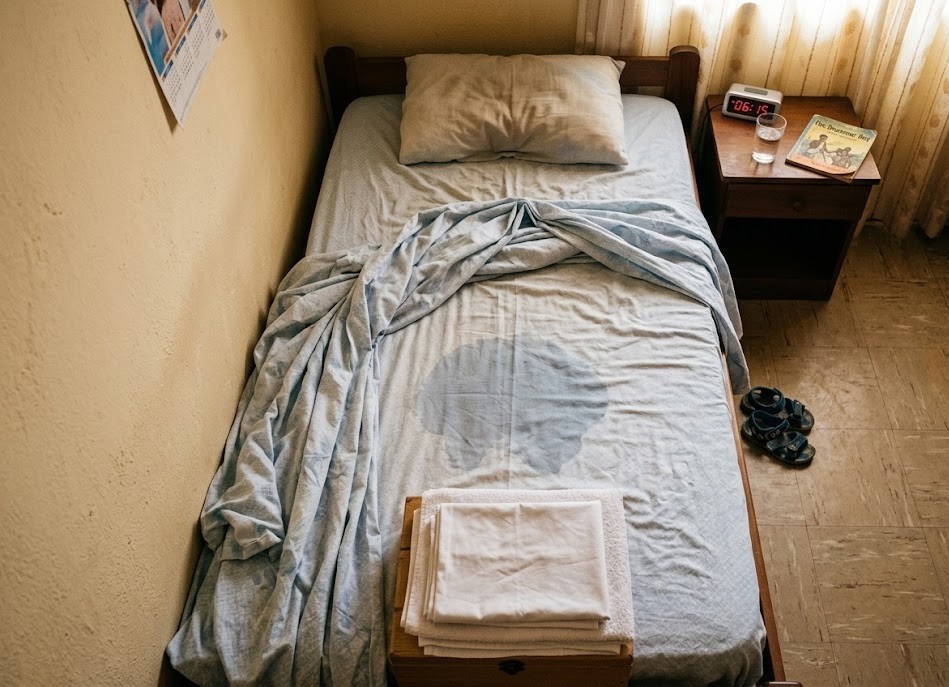
The morning shame. Every single morning, the first sensation is warm, wet fabric. Before you open your eyes, you already know. And the first thought isn't "I need to get up." It's "not again." Followed immediately by: "is Mummy going to be angry?" Your child carries that thought 365 mornings a year.
The social withdrawal. By age 8, I stopped asking to sleep at friends' houses. Not because I didn't want to. Because I couldn't risk it. What if I wet their bed? What if their mother found out? What if my friend told the whole school? I sat at home on weekends while my friends had sleepovers and said "I don't feel like going." I felt like going. I was terrified of going.
The school trips. Every school excursion that involved sleeping somewhere was a crisis. My mother would call the teacher privately and make "arrangements." The arrangements were always humiliating. Special sleeping position. Plastic sheet. A quiet conversation with a staff member. I could see the other children looking at my bed and wondering why mine was different.
The midnight waking. My mother woke me at 1am to use the toilet. Every night. She set an alarm, walked to my room, shook me awake, and marched me to the bathroom. I would stand there half-asleep, use the toilet, and go back to bed. By 4am, the bed was wet anyway. The bladder didn't care about the 1am trip. It did what it wanted to do.
The silent agreement. By my teenage years, my mother and I had a silent agreement: she wouldn't mention it and I wouldn't mention it. We both pretended it wasn't happening. She washed the sheets without comment. I changed my clothes without eye contact. The silence was louder than any conversation we'd ever had.
What Your Doctor Isn't Telling You
"They'll outgrow it" is the most common advice given to parents of bedwetting children. And it's true for SOME children. By age 7, about 90% of children have naturally stopped. But your child is still wetting the bed, which means they're in the 10% whose body hasn't resolved it on its own.
For these children, waiting is not a strategy. It's a sentence. I waited until 19. My childhood was shaped by that wait.
None of these causes are fixed by "outgrowing it." None are fixed by reducing water intake. None are fixed by midnight wake-ups. They're fixed by a structured protocol that addresses all three simultaneously.
Everything My Mother Tried (And Why It All Failed)
What Finally Stopped It (After 19 Years)
In my first year at university, I was terrified of hostel life. Sharing a room meant sharing a secret. I researched obsessively. Not Nigerian market remedies. Not "outgrow it" advice. I searched for the actual science of nocturnal enuresis (the medical name for bedwetting).
What I found changed everything: bedwetting in children and teenagers has THREE addressable causes, and the solution must target all three simultaneously.
Phase 1: Bladder-Brain Signal Training (Weeks 1-2). Specific daytime exercises that strengthen the communication pathway between the bladder and the brain. The child's brain learns to recognise and respond to the "full" signal, even during deep sleep. This is the core mechanism that "outgrowing it" eventually achieves. The protocol accelerates it.
Phase 2: Nighttime Bladder Capacity Building (Weeks 2-3). Gentle, progressive techniques that increase the bladder's holding capacity. A larger bladder means more time between fills, which means fewer overnight overflow events. Combined with Phase 1, the brain responds to the signal AND the bladder gives the brain more time to respond.
Phase 3: The Confidence Rebuild (Weeks 3-4). The bedwetting may stop by Week 2-3, but the FEAR of wetting doesn't stop immediately. The child still goes to bed afraid. Phase 3 is a structured confidence-building system that helps the child trust their own body again. This is the phase I wish someone had given me. The wetting stopped, but the fear of it returning stayed for years.
I followed this protocol myself at 19. The wetting stopped in Week 3. Completely. After 19 years, the bed was dry. I remember the first morning I woke up dry and pressed my hand against the sheet, not believing it. Dry. Warm, but dry. I stayed in bed for 10 minutes just feeling the dry sheet and crying quietly because I thought it would never happen.
I've been dry every night since. That was over 8 years ago.
The Dry Night Home Protocol
The Complete Home System for Parents Whose Children Deserve Dry Mornings
Created by someone who lived it. Built for parents who refuse to wait.

What's Inside:
Plus: 2 Essential Tools
🎁 BONUS #1: What Your Child Wants You to Know (But Can't Say)
(₦5,000 Value. Yours FREE)
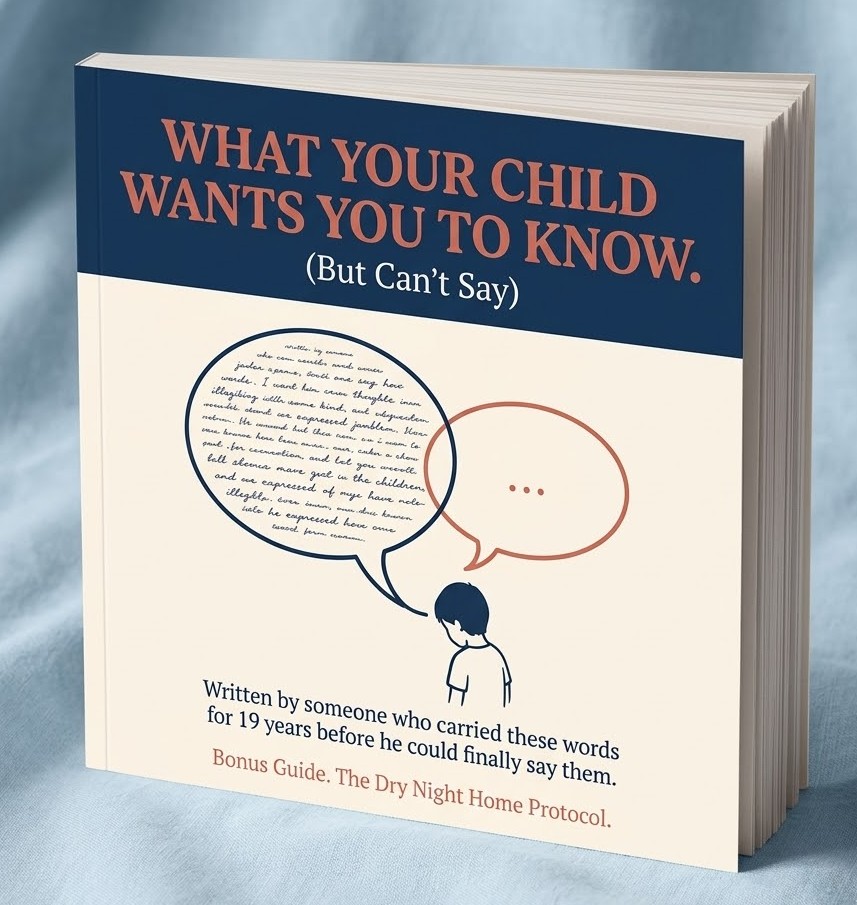
Written from the perspective of someone who lived with bedwetting for 19 years. What your child is thinking every morning when they wake up wet. What they feel when they see you washing their sheets. Why they stopped asking for sleepovers. Why they look at the floor at breakfast. The thoughts they carry to school, to church, to bed. This guide gives you a window into your child's inner world so you can support them with the understanding they desperately need but cannot ask for.
🎁 BONUS #2: The Dry Night Tracker and Morning Routine
(₦5,000 Value. Yours FREE)
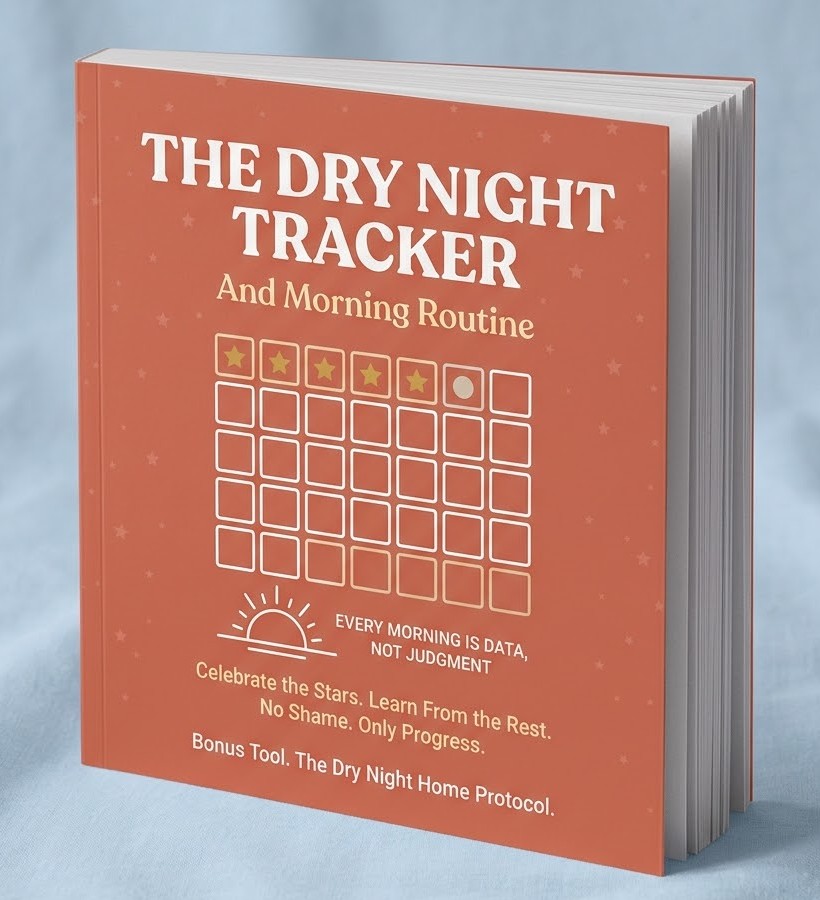
A printable 30-day tracking chart for your child's progress. Wet nights are marked neutrally (no red, no sad faces, no punishment markers). Dry nights are celebrated with stars. The morning routine removes shame from accidents: what to do, what to say, how to make the wet morning feel like data instead of failure. Plus: the dry morning celebration ritual that makes the first dry night unforgettable for your child.
Main Protocol: ₦25,000 value
Bonus #1 (What Your Child Wants You to Know): ₦5,000
Bonus #2 (Tracker + Morning Routine): ₦5,000
Total Value
₦35,000
You Pay Today
₦7,350
One payment. Lifetime access. Your child's last wet morning is closer than you think.
Instant download • Both tools included • 21-day guarantee • Created by someone who lived it
What Mothers Are Saying
"My son has wet the bed every night since he was a baby. I tried no water after 5pm, midnight toilet trips, herbal mixtures, two hospital visits. Same advice every time: 'he will outgrow it.' He is 9. When? This protocol was different because it was written by someone who LIVED with this problem, not someone who read about it. By Week 2, the wet nights dropped from 7 per week to 2. By Week 3, he was completely dry. The morning he woke up dry and ran to tell me, I held him and we both cried. He asked me 'Mummy, does this mean I can go for sleepover now?' I said yes."
"My daughter is 12. She has been hiding this from everyone including her father. She washes her own sheets before anyone wakes up. She stopped going for church camp last year. She told me 'Mummy, I just don't like camping.' She loves camping. She loves it. She just can't risk sleeping in a room with other girls. The teenage section of this protocol addressed her age specifically. The exercises were discreet. Nobody at school knew she was doing them. By Day 18, dry. She asked me about church camp next month. I said yes. I went to my room and cried."
"The conversation guide in this protocol changed everything. I didn't realise how much my face was telling my son even when my words were kind. The guide taught me exactly what to say and how to say it. My son started doing the exercises willingly because I framed them as a 'superpower training game.' By Week 2, he was dry 5 out of 7 nights. By Week 3, fully dry. The tracker chart with stars is on his wall. He is so proud of his stars."
"My son is 14. FOURTEEN. He has wet the bed his entire life. Every doctor said 'he will outgrow it.' He didn't outgrow it at 10. He didn't outgrow it at 12. At 14, I was terrified this would follow him to university the way it followed the author of this guide. The teenage protocol is different from the child protocol. It respects his age. It treats him as a young man, not a child. He did the exercises independently without me supervising. Dry in 19 days. He hasn't wet the bed in 3 months. He is getting his confidence back."
"Living in the UK, the GP said 'she'll grow out of it' and offered medication as a last resort. I didn't want my 10-year-old on medication for bedwetting. My sister in Lagos sent me this protocol. The bladder training exercises were simple and my daughter did them happily. By Day 12, the first dry night. By Day 21, consistent dry nights. The NHS offered pills. This protocol offered actual training. Training won."
"'What Your Child Wants You to Know' made me cry for an hour. I had no idea my son felt responsible for my tiredness. I had no idea he avoided eye contact at breakfast because he was checking if I was angry. I had no idea the silence between us every morning was him carrying shame he couldn't name. That bonus alone changed how I parent. The protocol stopped the wetting in 3 weeks. But the bonus changed our relationship permanently."
21-Day Conditional Guarantee
Follow the protocol with your child for 21 days. If you don't see a noticeable reduction in wet nights, I'll refund your ₦7,350.
You keep the protocol and both tools regardless.
Your child either sleeps dry or you pay nothing.
Questions Parents Ask
Q: My child is only 6. Is this too young?
No. The protocol includes an age-specific guide for children 6-9 that uses game-based exercises and simpler language. For younger children, the parent takes a more active role in guiding the exercises. The bladder-brain connection can be trained at any age after 5.
Q: My child is a teenager. Will they cooperate?
The teenage guide (14-16+) is written with teenage dignity in mind. It treats your child as a young adult, not a patient. The exercises are independent (they do them alone, without parental supervision). Most teenagers cooperate because the guide speaks to them directly and respects their intelligence. They WANT this to stop. They just need a method that doesn't humiliate them further.
Q: We've tried everything. Why would this be different?
Most approaches address one cause (reducing fluids, waking the child, herbal remedies). This protocol addresses all three causes simultaneously: the weak bladder-brain signal, the low nighttime hormone production, and the small bladder capacity. And it was created by someone who lived with every failed approach for 19 years before finding what actually works. This isn't theory. This is tested experience.
Q: Does my child need to know I bought this?
The protocol is designed for parent and child to do together, but in a supportive, shame-free way. The conversation guide (included) gives you the exact words to introduce this to your child in a way that feels like teamwork, not treatment. For teenagers, you can share the teenage section directly and let them read it independently.
From Someone Who Was Your Child
I'm not a doctor. I'm not a therapist. I'm not a herbalist. I'm a man who wet the bed for 19 years and finally stopped. I built this protocol because no child should carry this shame as long as I did. Not when the solution exists. Not when it takes 3-4 weeks. Not when it costs ₦9,800 and the only equipment needed is 10 minutes a day of exercises at home.
Your child is not broken. Their body just needs to be trained. This protocol is the training manual I wish someone had given my mother when I was 7 instead of 19.
Get The Dry Night Home Protocol NowP.S.
P.S. #1: Think about the last time your child was invited to a sleepover and said no. Think about the excuse they gave. Now think about the real reason. ₦9,800 to give them back the sleepovers, the school trips, the overnights at Grandma's house, and the childhood that bedwetting is quietly stealing one night at a time.
P.S. #2: The morning celebration in Bonus #2 is the moment that changes everything. When your child wakes up, presses their hand on a dry sheet, and looks at you with that face. The face that says "it worked." I was 19 when I had that morning. Your child can have it in 3-4 weeks. Start tonight.
P.S. #3: I wrote "What Your Child Wants You to Know" because nobody wrote it for my mother. She tried everything. She sacrificed her sleep for years. She carried my shame alongside her own exhaustion. And she never knew what I was feeling inside because I couldn't tell her. This bonus is my letter to her, addressed to you. Read it before you start the protocol. It will change how you see your child's mornings.
Yes. My Child Deserves Dry Mornings. Give Me the Protocol.